
Who Is Ruth Wisse and Why She Matters
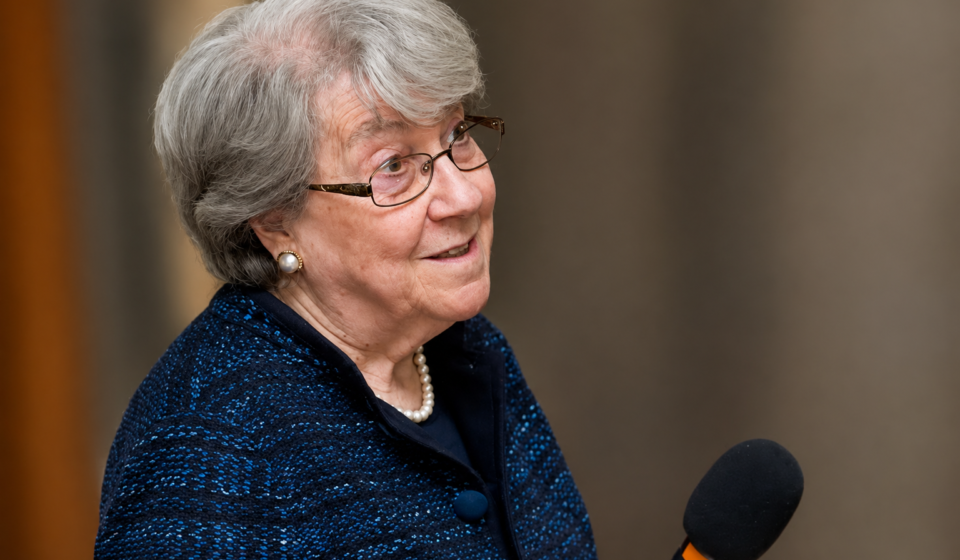
Ruth Wisse is one of the most respected names in the world of Yiddish literature and Jewish studies. Born on May 13, 1936, in the city of Czernowitz, which was then part of Romania and is now part of Ukraine, she grew up to become a towering figure in American academic life. Ruth R Wisse, as she is often credited in scholarly circles, spent decades teaching, writing, and defending a language and literature that many people had written off as fading into history. She proved them wrong. Through her research, her books, and her fearless public commentary, she turned Yiddish studies into a serious academic field and brought long-forgotten Jewish writers back into public conversation. Her career at Harvard University, where she held the title of Martin Peretz Professor of Yiddish Literature, cemented her reputation as one of the most influential Jewish intellectuals of her generation. But her story is about far more than titles and awards. It is about a woman who fled danger as a small child, found her calling almost by accident, and spent the rest of her life fighting for ideas she believed mattered deeply.
Early Life and the Journey From Europe to Canada
Ruth Wisse’s early life was shaped by the chaos of a world at war. She was born into a Jewish family in Czernowitz, a city with a rich and complicated history that had at different times belonged to different empires and nations. Her father worked as a chemical engineer and had been sent to the city to help run a rubber factory. When the political situation in Europe turned dangerous, the family made the difficult decision to leave everything behind. In 1940, when Ruth was only four years old, her parents managed to escape with their children and eventually settled in Montreal, Canada. This escape was not simple or guaranteed. Many of their relatives who stayed behind did not survive the Holocaust. Ruth Wisse has often reflected on how fortunate her family was to get out when they did, and this early brush with history shaped much of her later thinking about Jewish identity, survival, and resilience.
Once settled in Montreal, the Roskies family created a home filled with Yiddish language and culture. Her mother, in particular, insisted that the family speak Yiddish at home and turned their household into a informal gathering place for Yiddish writers, actors, and artists. This environment gave young Ruth an early and deep connection to a language and literary tradition that would later define her professional life. She attended Jewish schools in Montreal, where she also learned English and French, and she has often credited her early teachers, many of whom were displaced Jewish immigrants themselves, with inspiring her lifelong passion for both literature and teaching.
Education and the Unexpected Path Into Yiddish Studies
Ruth Wisse’s academic journey took an interesting turn early on. She attended McGill University in Montreal, where she originally focused on English literature. It was there that she met the poet Louis Dudek, who also mentored the future singer and songwriter Leonard Cohen, a fellow student and lifelong friend of Wisse. At the time, Ruth Wisse had no clear plan to specialize in Yiddish literature. In fact, when the acclaimed Yiddish poet Abraham Sutzkever first suggested she pursue Yiddish studies in graduate school, she reportedly laughed off the idea, wondering what she would even do with such a specialty. But Sutzkever’s suggestion stuck with her, and a few years later she enrolled in a master’s program in comparative literature at Columbia University, one of the very few schools in North America at the time that included Yiddish as part of a graduate degree program.
At Columbia, she had the rare opportunity to study under Max and Uriel Weinreich, a father and son team of respected Yiddish linguists. This experience solidified her interest in the subject. She eventually returned to McGill to complete a PhD in English literature, but her dissertation focused on a distinctly Yiddish topic: the figure of the schlemiel as a hero in Yiddish and American fiction. She completed her doctorate in 1969. This blend of literary training and specialized Yiddish knowledge gave her a unique perspective that would shape her entire academic career.
Marriage, Family, and Personal Life
Alongside her academic path,Ruth Wisse built a rich personal life. While still a student, she met Leonard Wisse, a law student at the Université de Montréal. By her own account, she fell for him almost immediately. The two married on March 17, 1957, during her final year of university. Ruth Wisse’s husband went on to become a respected lawyer and notary, practicing for more than three decades before the couple eventually moved from Montreal to Boston and later to New York City. Their marriage lasted for decades and became a steady foundation throughout Ruth Wisse’s demanding academic and public life.
The couple raised three children together, two sons and a daughter, and their home became known among friends and colleagues for lively Friday night dinners filled with conversation, debate, and the presence of notable guests from the literary and academic world. Leonard Wisse was known affectionately as “Len” to friends and family, and he remained a steady and supportive presence throughout his wife’s rise to academic prominence. He passed away in 2022, leaving behind a large extended family, including grandchildren who called him “zeyde,” the Yiddish word for grandfather. Ruth Wisse has spoken and written about their long partnership with warmth, describing how their honeymoon trip to Israel even played a role in her early academic connections, since it was during that period that she crossed paths with people who would later influence her scholarly direction.
Building a Career at McGill University
Ruth Wisse’s professional teaching career began at McGill University, where she started teaching in the late 1960s. At the time, Yiddish literature was not widely recognized as a serious academic subject in most universities. Ruth Wisse became a pioneer in this regard. She was the first person to offer a course specifically on Yiddish literature within McGill’s English department, a proposal that was approved but not without resistance from within the department itself. Undeterred, she continued to build out the offerings, and by 1968 she had helped establish what would eventually become McGill’s Department of Jewish Studies. This was a significant achievement, as it created a lasting academic home for a subject that had previously been treated as a footnote within other departments.
During her years at McGill, Ruth Wisse also spent time in Israel, where she taught Yiddish literature at Tel Aviv University after she and her family briefly relocated there in 1971. However, the family soon returned to Canada, and she resumed her position at McGill, continuing to expand the university’s Jewish studies program. Her work during this period established her as a serious scholar and a committed builder of academic infrastructure, not just a writer or commentator.
The Move to Harvard and National Recognition
In 1993, Ruth Wisse’s career reached a major milestone when she was recruited to Harvard University to become the first person to hold the newly created position of Martin Peretz Professor of Yiddish Literature. This chair had been endowed by Martin Peretz, a longtime publisher of The New Republic magazine, and it represented a formal recognition that Yiddish literature deserved a permanent place within one of the most prestigious universities in the world. At Harvard, Ruth Wisse also held the title of Professor of Comparative Literature, and her academic home spanned both the Department of Comparative Literature and the Department of Near Eastern Languages and Civilizations.
Her time at Harvard proved enormously influential. She trained generations of students, many of whom went on to become scholars, translators, and cultural critics in their own right. Colleagues described her as a formidable and brilliant presence in the classroom, someone whose sharp insight and refusal to back down from intellectual disagreement made her both respected and, at times, controversial. In 2007, her contributions to the field were recognized at the highest level when she received a National Humanities Medal, presented at the White House. The award specifically praised her scholarship and teaching for illuminating Jewish literary traditions and enriching the broader understanding of Yiddish literature and Jewish culture. She retired from her Harvard position in 2014, closing out more than two decades of teaching at the university, though she remained active in public life long after stepping away from the classroom.
Major Books and Scholarly Contributions
Throughout her career, Ruth Wisse produced a substantial body of written work that helped define how modern readers understand Yiddish literature. Her first major book, which grew out of her doctoral dissertation, examined the figure of the schlemiel, a bumbling but sympathetic character type found throughout Yiddish storytelling. This book established her reputation as a scholar who could combine serious academic analysis with a lively, accessible writing style.
Perhaps her most celebrated academic work is a sweeping survey that traces the development of modern Jewish literature and argues for its central importance to understanding Jewish history and identity. This book earned her the National Jewish Book Award in the year 2000 and remains one of the most widely read introductions to the subject for general audiences. She also collaborated with other prominent scholars, including the critic Irving Howe, to produce influential anthologies of Yiddish poetry and fiction, helping to translate and preserve works that might otherwise have been lost to English-speaking readers entirely.
Beyond her purely literary scholarship, Ruth Wisse also became known for her political writing. Her books examining Jewish political history and the relationship between Jewish communities and power took a firmly conservative stance, arguing that Jewish communities had sometimes been too quick to blame themselves for the hostility directed against them. These books sparked significant debate and cemented her reputation as a fearless, if polarizing, public intellectual.
A Voice in Political and Cultural Debates
Ruth Wisse has never shied away from controversy. Her political views, often described as neoconservative, have placed her at odds with many in the academic world, particularly on issues related to Israel, feminism, and American Jewish identity. She has argued forcefully in favor of traditional family structures and has been an outspoken critic of what she views as the excesses of the women’s liberation movement. She has also been one of the most vocal academic defenders of Israel, arguing that criticism of the Jewish state often echoes older patterns of blaming Jewish communities for the hostility they face rather than confronting the actual sources of that hostility.
These positions have earned her both passionate supporters and sharp critics. Some commentators have pushed back strongly against her characterizations of Palestinian suffering and her broader political framework. Regardless of where one stands on these debates, there is little disagreement that Ruth Wisse has been one of the most consistently outspoken and intellectually rigorous voices in these ongoing conversations, refusing to soften her positions even when they proved unpopular in academic settings.
Later Years and Continued Influence
After retiring from Harvard, Ruth Wisse did not step back from public life. She became a Distinguished Senior Fellow at the Tikvah Fund, an organization dedicated to Jewish ideas and education, where she continued to lecture and develop educational materials on topics ranging from classic Jewish literature to modern political history. She has continued writing essays for publications such as Commentary and the Jewish Review of Books, sharing her insights on literature, culture, and current events well into her later decades. In 2021, she published a memoir reflecting on her personal and intellectual journey, tracing her path from a childhood shaped by displacement to a lifetime spent defending ideas she believed were under threat.
Ruth Wisse’s legacy is not simply the list of awards and titles she accumulated, though that list is impressive. Her true legacy lies in how she changed the academic landscape for an entire field of study. Before her efforts, Yiddish literature was often treated as a minor curiosity, something belonging to an older generation with little relevance to contemporary scholarship. Ruth Wisse helped prove that this literature carried deep insight into some of the most difficult and important questions of the twentieth century, including displacement, survival, assimilation, and identity. Her work ensured that future generations of students would have the opportunity to study this rich literary tradition in serious academic settings, a possibility that barely existed when she herself first became interested in the subject as a young student.
Conclusion
Ruth Wisse’s life story combines personal history, intellectual achievement, and public controversy in a way that few academic careers manage to do. From her childhood escape from wartime Europe to her groundbreaking work building Yiddish studies programs at McGill and Harvard, she has left a lasting mark on how Jewish literature and history are studied and understood. Her personal life, including her long marriage to her husband Leonard Wisse and the family they built together, gave her a stable foundation from which to pursue an often demanding and sometimes contentious public career. Whether people agree with her political positions or not, few can dispute the depth of her scholarship or the significance of her contributions to preserving and elevating a literary tradition that might otherwise have faded from view. Ruth Wisse remains a name that continues to spark discussion, respect, and debate across academic and cultural circles alike.
ALSO READ : Bruno Mars Charlotte: Everything You Need to Know About The Romantic Tour Stop at Bank of America Stadium