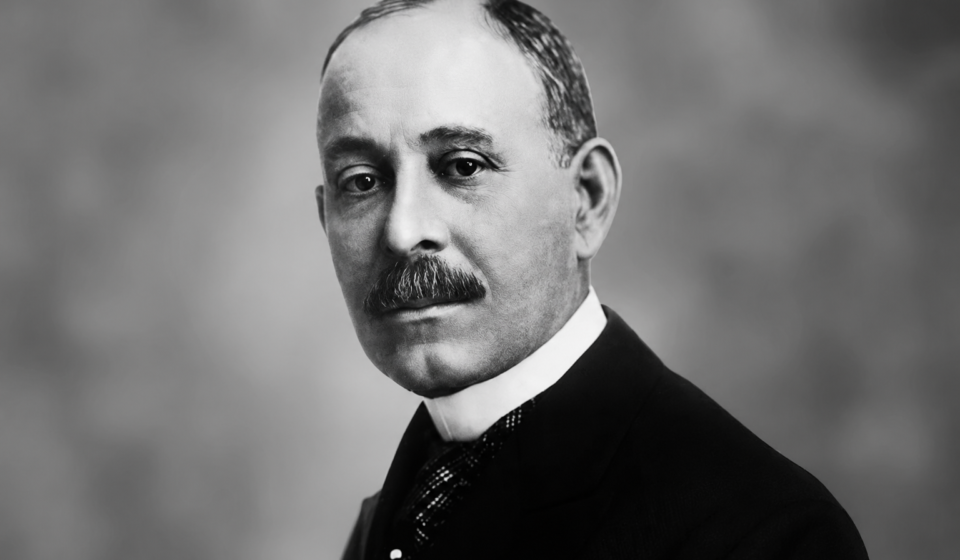

Daniel Hale Williams was one of the most remarkable physicians in American history. At a time when racial segregation kept Black Americans out of hospitals, medical schools, and professional organizations, he broke through every barrier with skill, determination, and an unwavering commitment to his patients. His life is a story of excellence achieved under impossible conditions, and his contributions to surgery and medical education continue to shape healthcare in the United States to this day.
The Early Life of Daniel Hale Williams
Daniel Hale Williams was born on January 18, 1856, in Hollidaysburg, Pennsylvania. He was one of seven children in a middle-class family with a mixed heritage that included African American, Native American, and European roots. His father, Daniel Hale Williams Sr., was a prominent member of a fraternal organization that advocated for civil rights, and this early exposure to activism and community leadership left a lasting impression on the young Williams.
When his father died, the family faced serious financial difficulties. Williams moved around frequently during his youth, living with various relatives and taking on odd jobs to support himself. He worked as a shoemaker’s apprentice and a barber, skills that helped him earn money but did little to satisfy his intellectual ambitions. It was during this unsettled period that williams daniel hale encountered Harry Anderson, a successful attorney who recognized the young man’s potential and took him under his wing. Anderson introduced him to the idea of pursuing a professional career, and this guidance helped set Williams on a new course.
Williams eventually moved to Janesville, Wisconsin, where he studied at the Classical Academy and then began reading law. However, his path shifted dramatically when he met Dr. Henry Palmer, the surgeon general of Wisconsin. Palmer’s work fascinated him, and Williams made the life-changing decision to pursue medicine instead. He became an apprentice under Palmer, learning anatomy, physiology, and basic surgical techniques before enrolling formally at Chicago Medical College, which later became the Northwestern University Medical School. He earned his medical degree in 1883 and opened his own practice on the South Side of Chicago shortly afterward.
Building Provident Hospital: A Landmark in Medical History
One of the most enduring achievements of dr daniel hale williams was the founding of Provident Hospital in Chicago in 1891. At the time, Black patients in Chicago were routinely turned away from white hospitals, and Black medical graduates had almost no hospitals where they could train or practice. Williams recognized that this was not just a civil rights injustice but a public health crisis, and he set out to solve it.
Provident Hospital opened its doors on May 4, 1891, and it was genuinely revolutionary in two ways. First, it provided medical care to Black patients who had nowhere else to turn. Second, and equally important, it established the first nursing training school for Black women in the United States. This nursing school gave young Black women the professional training they needed and sent qualified nurses into communities that desperately needed healthcare workers.
What made Provident Hospital even more extraordinary was that it was interracial from the very beginning. Both Black and white patients were treated there, and both Black and white physicians were on staff. This was a bold statement in the deeply segregated world of 1890s America. Williams believed firmly that medicine should be about healing, not race, and he built that belief into the very foundation of the institution. Provident Hospital still operates in Chicago today, more than 130 years after Williams established it, a testament to the vision and practicality of its founder.
The Historic Open-Heart Surgery of 1893
The achievement that made daniel hale william a household name in medical circles happened on July 10, 1893. A young man named James Cornish was brought to Provident Hospital with a knife wound to his chest. The blade had penetrated his chest cavity and caused a dangerous injury near the heart. In the 1890s, surgery on the chest was considered extraordinarily dangerous, and surgery anywhere near the heart was thought to be virtually impossible. Most physicians of the era believed that the heart could not be operated on and that any such attempt would result in the patient’s immediate death.
Williams, however, assessed the situation with calm precision. Without the benefit of X-rays, blood transfusions, or the sophisticated monitoring equipment that modern surgeons rely on, he opened Cornish’s chest, repaired a tear in the pericardium the sac surrounding the heart and successfully closed the wound. James Cornish survived the operation and went on to live for another fifty years, dying in 1943 at an old age. The surgery was reported in the press as the first successful open-heart surgery in the world, and it sent shockwaves through the medical community.
It is worth noting that historians have since engaged in some debate about the precise nature of the procedure and whether it should be classified as true open-heart surgery in the modern sense. Some have pointed out that the heart muscle itself may not have been directly sutured. Nevertheless, the historical and medical consensus holds that what Williams accomplished that day was groundbreaking. He demonstrated that the chest could be opened, that the pericardium could be repaired, and that patients could survive such interventions. This changed the thinking of an entire generation of surgeons and opened the door to cardiac surgery as a medical discipline.
Serving at Freedmen’s Hospital in Washington, D.C.
Following the success of Provident Hospital and his famous surgery, dr daniel hale williams was appointed Surgeon-in-Chief of Freedmen’s Hospital in Washington, D.C., in 1894, by President Grover Cleveland. Freedmen’s Hospital had been established after the Civil War to provide care to formerly enslaved people, but by the time Williams arrived, it had fallen into a state of disrepair and disorganization. Medical care was inconsistent, hygiene standards were poor, and the institution was struggling to fulfill its mission.
Williams spent four years transforming Freedmen’s Hospital into a model medical institution. He reorganized the hospital into specialized departments, introduced rigorous hygiene and antiseptic protocols, and established an internship program that trained young Black physicians. He also created a nurse training program to develop a pipeline of skilled nursing professionals for the Black community. Under his leadership, the mortality rate at the hospital dropped significantly, and the quality of care improved dramatically.
His time in Washington also introduced him to some of the leading intellectual and political figures of the era, including Booker T. Washington, the influential educator and civil rights leader. The relationship between Williams and Washington would later become complicated, but in these early years, they shared a common belief in the power of professional achievement and institution-building as tools for advancing the lives of Black Americans.
A Pioneer in Medical Organizations and Professional Recognition
The professional achievements of williams daniel hale extended far beyond individual surgeries and hospital administration. He was deeply committed to building the infrastructure of organized medicine and ensuring that Black physicians had a place within it. In 1895, he co-founded the National Medical Society, an organization created to serve Black physicians who were excluded from the American Medical Association and state and local medical societies. This organization gave Black doctors a platform to share knowledge, advocate for their patients, and advance their careers in a profession that systematically excluded them.
In a remarkable sign of his standing in the broader medical world, Williams was also admitted to the American College of Surgeons in 1913 as one of its charter members. This was an enormous honor and a powerful signal that his talents were recognized even by the white medical establishment that so often closed its doors to Black professionals. He was the only Black physician among the charter members of that founding group, a distinction that speaks both to his extraordinary skill and to the barriers that prevented other equally talented Black physicians from achieving similar recognition.
Williams also contributed to medicine through his teaching and mentoring. He trained dozens of physicians and nurses over the course of his career, and many of his students went on to build hospitals, medical schools, and practices in communities across the country. His influence spread far beyond what any single person could achieve alone, multiplying through the generations of medical professionals he helped train and inspire.
Personal Life and Later Years
Despite his professional success, the personal life of daniel hale williams was not without difficulty. He married Alice Johnson in 1898, a well-educated woman from an elite Black family in Washington, D.C. The marriage was not entirely harmonious, and the couple eventually became estranged. Alice died in 1924, and Williams never remarried.
Williams suffered a stroke in 1926 that left him partially paralyzed and largely removed from public and professional life. He spent his final years in relative isolation at his home in Idlewild, Michigan, a resort community that had become a popular destination for middle-class Black Americans. He died on August 4, 1931, at the age of seventy-five.
In the years following his death, his legacy was not always fully appreciated, partly because of tensions with other prominent figures in the Black community and partly because the full significance of his contributions took time for historians to document and assess. However, as the history of American medicine has been more carefully examined, the stature of dr daniel hale williams has only grown.
The Lasting Legacy of a Medical Giant
Today, daniel hale williams is rightly celebrated as one of the great figures in the history of American medicine. His founding of Provident Hospital demonstrated that access to quality healthcare was a civil rights issue long before that language was widely used. His pioneering surgery in 1893 helped open the door to modern cardiac surgery. His work at Freedmen’s Hospital showed that even a failing institution could be transformed through determined, skilled leadership. And his role in building professional organizations for Black physicians helped create pathways for generations of medical professionals who came after him.
His story is a reminder that progress in medicine has never been purely a matter of scientific discovery. It has always also required courage, vision, and a willingness to challenge the social conditions that deny people access to care. Williams daniel hale did all of these things in a time when the obstacles he faced were almost unimaginably severe, and he did them with a level of excellence that has stood the test of time.
Schools, hospitals, clinics, and awards bear his name across the United States. His portrait has been featured on commemorative stamps. He has been inducted into numerous halls of fame and recognized by medical and civil rights organizations alike. But perhaps the most fitting tribute to his legacy is the simple fact that the institutions he built still stand, the techniques he pioneered are still practiced, and the physicians he trained left ripples that continue to spread across American healthcare more than a century after his greatest achievements.
Daniel Hale Williams did not just perform surgery. He performed a kind of social surgery as well, cutting through the barriers of race and prejudice to build something more just and more humane. That is a legacy worth knowing, celebrating, and building upon.
ALSO READ : Zelig Williams: The Mysterious Disappearance of a Broadway Star That Shocked the Nation